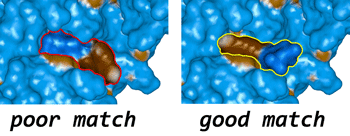
 PLATINUM is designed for calculation of hydrophobic properties of molecules and their match or mismatch in receptor–ligand complexes. These properties may help to analyze results of molecular docking.
Step 1: Upload files
Please select a ’ligand“ file (in one-by-one mode) — if you want just to assess their hydrophobic properties — and add a single receptor file to assess ligand/receptor interactions. (File size limit: 5 Mb.)
Please note: PLATINUM requires that all molecules are protonated!
What is PLATINUM?
Calculate and visualize molecular hydrophobic/hydrophilic properties using the concept of “Molecular Hydrophobicity Potential” (MHP). Hydrophobic and stacking interactions in biomolecular complexes can be estimated and used
How to use PLATINUM?
- Complementarity of hydrophobic/hydrophilic properties in biomolecular complexes:
- to view molecular hydrophobic properties upload ligand(s);
- to view hydrophobic complementarity add a receptor;
- on Step 2 select a reference ligand (optionally).
- 2D hydrophobic maps for lipid bilayers and α-helices:
- upload a bilayer or an α-helix as a receptor (currently only.GRO files are allowed);
- add ligand(s) to view the contact area on the map (optionally).
For details refer to the manual and go through the tutorial; don’t forget files for the tutorial.
System requirements
Some components on the site (viz. massive files upload) require modern HTML5-capable web-browser with javascript enabled.
